
Fabrication standards can feel very confusing until you’re the one signing off on a shipment that doesn’t meet the code your project actually specified. API, ASME, and BS aren’t interchangeable labels. Each governs a different part of how steel is designed, welded, tested, and documented. Mixing them up during procurement can mean rejected material or a failed inspection well after the order is placed.
Anyone involved in steel trading in Dubai deals with this constantly, since projects across construction, oil and gas, and industrial fabrication routinely specify different standards depending on the application.
This is one of the more overlooked risks in steel trading, where a supplier’s confidence about compliance doesn’t always match the paperwork behind it. This article breaks down what each of these standards actually covers, why they matter to a buyer rather than just an engineer, and what to confirm before you commit to an order.
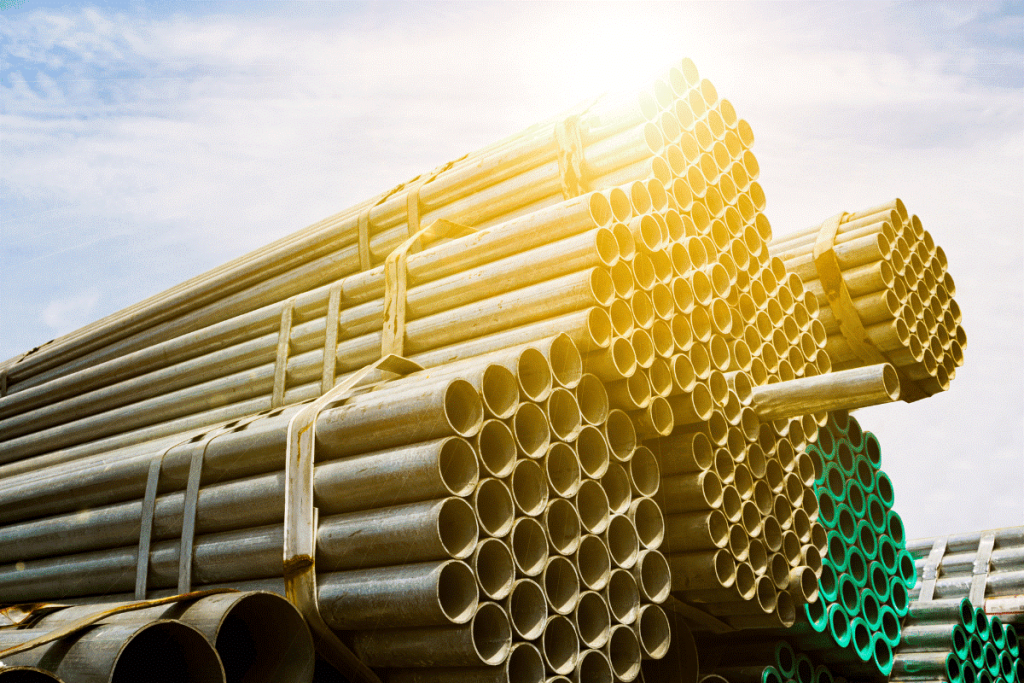
API Standards: What They Actually Cover
API standards, published by the American Petroleum Institute, are most relevant to buyers working in oil and gas or pipeline-related fabrication.
- API 5L governs line pipe specifications, covering the chemical composition, mechanical properties, and manufacturing process for pipe used in oil and gas transmission systems.
- API 1104 separately governs the welding of pipelines and related facilities, setting out qualification requirements for welding procedures and acceptance criteria specific to girth welds on pipeline sections.
These standards exist because pipeline failures carry serious safety and environmental consequences, so the tolerances and testing requirements are considerably stricter than general structural fabrication. Buyers involved in steel trading in Dubai for the energy sector need to confirm which specific API standard applies to their order, since a pipe certified to one API grade isn’t automatically interchangeable with another.
ASME Compliance: Piping, Pressure Vessels, and Welder Qualification
ASME, the American Society of Mechanical Engineers, covers a different but overlapping set of applications.
- ASME B31.3 governs process piping used in chemical plants, refineries, and industrial facilities, setting requirements for design, fabrication, and inspection based on the fluid service category of the line.
- ASME Section VIII of the Boiler and Pressure Vessel Code applies to pressure vessels
- ASME Section IX sets out the requirements for qualifying welding procedures and welders a step that has to be completed and documented before any production welding begins on a project specified to this code.
This qualification piece is often where buyers run into trouble, since a fabricator’s welders need to hold current, code-specific qualifications rather than a general welding certificate. Anyone managing steel trading in Dubai for industrial or process applications should ask suppliers directly whether their welding procedures are qualified under ASME Section IX for the specific joint types and materials involved.
BS and EN Standards: The Structural and Welding Quality Backbone
British and European standards form the backbone of structural fabrication requirements across much of the UAE market. BS EN 1090 governs the execution of steel and aluminium structures, defining execution classes that set the level of quality control, welding oversight, and documentation required based on the structure’s risk category.
Alongside this, ISO 3834 sets quality requirements for fusion welding of metallic materials, and fabricators working to recognised standards typically hold certification against one of its parts depending on the complexity of the work involved.
Mill test certificates issued under EN 10204 the 3.1 and 3.2 classifications also fall under this family of standards and confirm the traceability of the base material used in fabrication. For buyers managing steel trading in Dubai across construction and structural projects, confirming that a fabricator holds current ISO 3834 or EN 1090 certification is a reasonable and increasingly standard request.
Why These Standards Matter More When You’re Sourcing Locally
Specifying the correct standard matters just as much when material is sourced within the UAE as it does for imports, since local consultants and municipality inspectors check against the same codes referenced in project documentation. A fabricator working without the correct qualifications can still produce a weld that looks acceptable visually while failing to meet the non-destructive testing or documentation requirements the code demands.
This gap often only becomes visible during a site audit or a client’s quality inspection, by which point rework is far more expensive than it would have been to verify compliance upfront. Buyers active in steel trading in Dubai reduce this risk considerably by confirming a supplier’s current certifications before placing an order rather than relying on assurances alone.
What to Ask For Before You Place a Fabrication Order
Before confirming any fabrication order, ask for the specific code the fabricator is qualified against not just a general statement of compliance along with copies of current welding procedure qualifications and welder certifications relevant to the joint types in your project. Request the applicable execution class if the order falls under BS EN 1090, and confirm whether mill test certificates will be issued as 3.1 or 3.2 depending on the risk category of the application. It’s also worth asking how non-destructive testing will be documented and at what percentage of welds it will be applied, since this varies meaningfully between API, ASME, and BS frameworks. A transparent answer to each of these questions is a strong signal that the supplier understands the standard rather than simply referencing it.
Conclusion
API, ASME, and BS standards each solve a different problem pipeline integrity, pressure system safety, and structural execution quality and confusing one for another during procurement is where most fabrication disputes originate. Buyers who confirm the exact standard, the welder qualifications, and the certificate type before ordering avoid the vast majority of compliance issues that surface later in a project. BM Steel supports fabricators and contractors across steel trading in Dubai with certified material and clear documentation aligned to the standard your project actually requires. Speak to our technical team before your next order to confirm the right specification for your application.
Frequently Asked Questions
No, API and ASME cover different scopes and requirements, so material certified under one standard should not be assumed compliant with the other without separate verification.
Certified material alone doesn’t guarantee a sound weld welding procedures and welders must be separately qualified under the applicable code, such as ASME Section IX, to ensure the joint meets the required strength and integrity.
It’s a classification that sets the level of quality control, welding oversight, and documentation required for a structure, based on its consequence of failure and complexity.
Yes, it’s a reasonable and increasingly standard request for buyers in steel trading in Dubai, since it confirms the fabricator operates under a recognised quality management system for welding.